


Growing up, I often heard whispers of a luxurious cloth called Akwete, spoken of with deep respect among Igbo women. My mother described it as regal, rare, and more expensive than the popular Akwa George, typically worn by brides. But despite the stories, I had never seen it in any marketplace. It seemed more myth than reality.
That changed years later when I finally had the chance to visit Akwete the small town where this treasured fabric originates. Many people confuse it with the bustling Akwete Market in Aba, Abia State, but the real Akwete is a quieter, more cultural haven tucked along the expressway leading to Port Harcourt.
If you ever find yourself in Aba, your best route is to head to Osisioma Park. From there, you can catch a taxi straight to Akwete. Be prepared, though—the road (as of 2021) was in poor condition, and heavy rainfall on the day of my visit made the journey more challenging. But the destination? Absolutely worth it.

Popularly known as Akwa Mmiri which loosely translates to “water cloth” due to its silky texture, the Akwete fabric once served as a significant trade item, much like palm oil. Its reputation extended far beyond Igbo land, becoming especially popular among the Kalabari, Okrika, and other communities in the Niger Delta.
Its Price varies depending on the intricacy of the design, and thankfully, they’re usually open to negotiation *winks*
Weaving Akwete cloth was once an art passed down through generations, primarily from mother to daughter. Young girls were carefully taught the skill, and the knowledge was often kept within the family rarely shared with outsiders until more recent times. The materials traditionally used include wool, cotton, silk, raffia, hemp, and even fibers from the bark of certain trees, giving the fabric its rich texture and durability.
By the 1890s, Akwete cloth had already made its way into European museums, quietly showcasing the craftsmanship of Igbo women to the world. However, it wasn’t until 1963 that it gained true international recognition, following an exhibition at the Textile Museum in Washington, D.C. The fabric’s prestige soared even higher in 1990, when it was reportedly commissioned by then Prince Charles and the late Princess Diana securing Akwete’s place not just in tradition, but in global textile history.

Akwete cloth. Some Rights Reserved CC-BY-NC-SA by British Museum
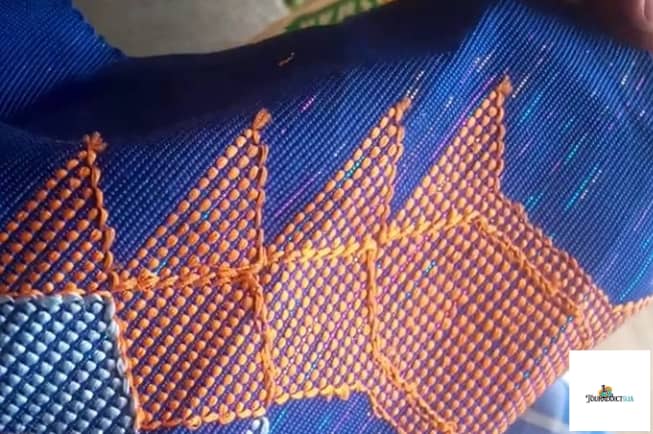

Each Akwete cloth is a one-of-a-kind masterpiece woven and designed by a single artisan. This makes every piece not just a garment, but a personal expression of creativity and heritage. With its intricate patterns and storied history, the Akwete fabric stands as a proud symbol of Igbo craftsmanship.
A Call to Reclaim a Cultural Treasure
Despite its deep cultural significance, Akwete has sadly been relegated to the background eclipsed by more commercially dominant fabrics like Ankara, Aso Oke, and Kente. But Akwete deserves a revival. This is more than cloth; it’s identity, legacy, and artistry woven into threads.
Promoting Akwete is not just about fashion, it is about preserving a disappearing tradition, empowering local artisans, and opening doors for sustainable tourism in Abia State. Imagine travelers journeying not just to see Akwete, but to experience the weaving process, purchase directly from creators, and learn the stories behind each design.
In the heart of this quiet community lies a vibrant opportunity to turn culture into commerce and pride into prosperity.
Have You Visited Akwete or Worn Akwete Cloth?
Share your experience in the comments or tag me on social media, I’d love to hear your story or see your favorite design!


