

…….Born To Die
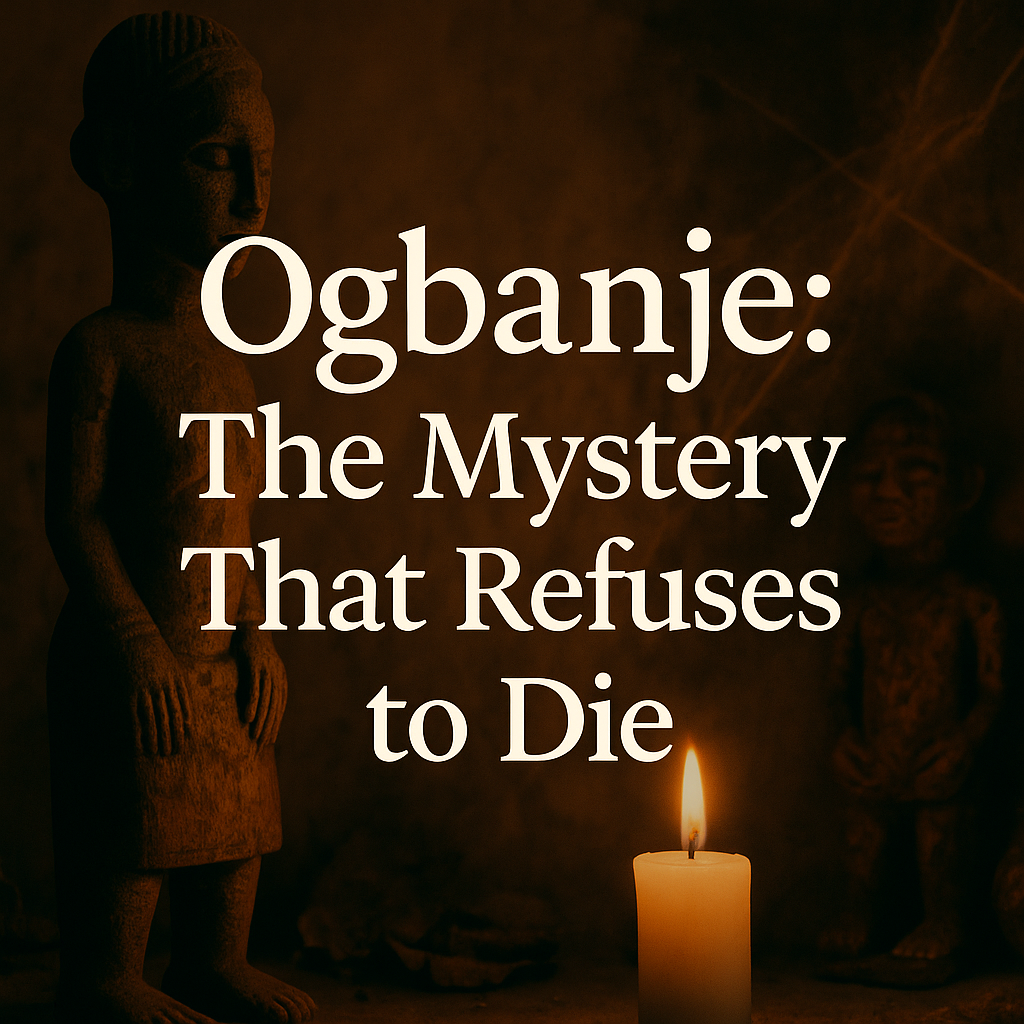
Ogbanje, a single word known to different cultural backgrounds, among the yorubas they are know as “Abiku” to the igbos “ogbanje”. The Ogbanje is said to be a spirit child—one who is born only to die young and return again to the same mother, only to repeat the cycle. Ogbanje is not your typical story, it is not just about death. It is about returning—through the same womb, to the same family—over and over, as though the spirit has unfinished business.
Why? you might ask, well…….In every birth, there is hope, In every death, devastation. And in every return, a deepening mystery.
The old ones say Ogbanje children make a pact with the spirit world before birth. They come to earth only to test, to tease, to torment. They come, they die, and they return… laughing at the living from the land beyond.
Some are born with strange marks, uncanny wisdom, or eyes that feel older than their bodies. Some even warn their parents, saying things like:
“I told you I wouldn’t stay long.”
🌍 Across Cultures: One Phenomenon, Many Names
Ogbanje is an Igbo word, but the mystery it describes echoes across cultures in Nigeria:
🔮 Yoruba Belief – “Abiku”
In Yoruba traditions, these spirit children are known as Abiku—”born to die.” Like the Igbo Ogbanje, they are said to come and go at will. Mothers may mark them with cuts or burn their feet, hoping to stop the return. Abiku poems often carry deep sorrow and plea-like dialogue with the spirit child.
🔥 Urhobo & Benin – Reincarnating Spirits
Among the Urhobo, Isoko, and parts of Benin, similar beliefs exist around reincarnation and troubling ancestral spirits. Names are often chosen to insult the spirit or ward it off (e.g., “Oghenemine” – God sees me). Rituals are performed to appease the ancestors and break cycles.
👣 Hausa-Fulani – Hidden but Present
Though less openly discussed in Northern Nigeria, among the Hausa-Fulani, deaths of young children are sometimes attributed to spiritual causes, especially if patterns emerge. Islamic belief may overshadow older folk narratives, but practices like ruqya (spiritual cleansing) hint at lingering traditional fears.
Across tribes, the pain is the same. The explanation varies. The grief finds a name in spirits.
Where the confusion begins……….
First I would like to make it clear that there is a difference between an Ogbanje and Mmuo Mmiri (water child). These two sects of people are one of the most misunderstood, in Igbo societies. Mostly because we were told by different foreign religious groups that these people, are possessed by evil spirits and demons.
In Igbo tradition, “Ogbanje” and “Water Child” are related but distinct concepts. “Ogbanje” refers to a spirit child who repeatedly dies and is reborn into the same family. “Water Child,” or “Nwa Mmiri,” is a more general term for a spirit that originates from the water world (marine kingdom) and can be associated with various types of spirit beings, including Ogbanje. While all Ogbanje are believed to be connected to the water world, not all Water Children are necessarily Ogbanje.
🌀 Between Two Worlds
In traditional belief, the Ogbanje exists between the spirit realm and the human realm—unable or unwilling to commit to either. This liminality makes them mysterious, often feared, some are believed to carry a powerful spiritual energy, able to disrupt, heal, or harm, depending on how they are received.
In some stories, the child grows old enough to speak, to laugh, even to show signs of strange knowledge, only to fall ill and die suddenly. Hence a pattern forms, Names are withheld, Spiritual consultations are made…..And the mothers? They carry not just sorrow but a spiritual burden. Questioning everything like: “Were they chosen?” “Cursed?” Or simply fated?”
Ogbanjes are a different kind of people from ndị mmụọ mmiri, they are people with extra sensory from infra world. They communicate between the physical world and spiritual world, they are gifted people. Most of them ends up as Dibịa or Ezenwanyi, they see, they sense, communicate with things ordinary people can not see because of their nature
🗝️ The Search for the Iyi-uwa
In many traditions, the only way to break the Ogbanje cycle is to find and destroy the “Iyi-uwa” (a physical object hidden by the spirit child said to tie them to the spirit world), This item varies by individuals, It could be a bead, stone, a lock of hair, mirror, or clay pot buried secretly by the child.
The task often falls to the Dibia after consultation and it is certain that indeed the child is an ogbanje to perform a ritual to uncover the hidden object. Once found and destroyed, the Ogbanje’s cycle may end, allowing the child to remain in the land of the living.
But even then, doubt lingers. Is the cycle truly broken? Or has the spirit simply changed tactics?
🧬 Modern Perspective of Ogbanje
Today, science might explain the Ogbanje phenomenon through the lens of genetics, undiagnosed illnesses, or infant mortality like sickle cell anemia, which could cause recurrent child loss in families yet the traditional lens still offers comfort, ritual, and closure where science may fall short.
In many families, the Ogbanje story survives not because it contradicts science, but because it fills emotional and spiritual gaps that medicine cannot reach. The myth holds power because it speaks to something deeper than logic—a way to name the unnameable, to understand the unbearable, to explain the unexplainable and make sense to process grief.
Forgive me for digressing, but i can’t help but wonder…..What if Ogbanje is more than a child’s spirit?
What if it’s a symbol?
………Of the parts of ourselves that return.
………The trauma we bury but don’t destroy.
…….The repeated patterns in our lives we did not get the chance to break before reincarnating.
Yes I know there are people who do not believe in reincarnation but do not worry, i will be talking about my aspect on that soon..
Today’s Ogbanje may not wear beads or anklets but rather, They may wear anxiety, Detachment (a fear of staying too long not just life but in relationships)
They may be hyper-intuitive, intense, spiritually sensitive, easy to counsel, you find yourself pouring out your soul to this stranger you only met, or you feel connected to a stranger you just met.
Maybe, Just maybe……..some of us, like the child who stayed, may be living proof that the cycle can be broken because believing in Ogbanje means believing in reincarnation which most cultures and religion do not.
💭 In Conclusion…
The story of the Ogbanje is the story of life’s most difficult questions: Why do some souls leave so early? Why do we suffer? Is there meaning in loss? This is because In them lives a duality—tragedy and power, rebellion and redemption.
Drop Your Comment below on what they are called where you are from, share your stories too.


